

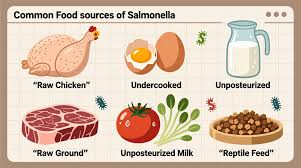
Salmonella species bacterial infections are a leading cause of enteric gastrointestinal disease in the United States. They are spread through consumption of or contact with contaminated food or water or contact with infected persons or animals. Salmonella infection can be categorized as nontyphoidal Salmonella (NTS) or typhoidal Salmonella (TS). TS infections include typhoid fever and Paratyphi infections. These infections accounted for approximately 1% (1,496 of 107,207) of Salmonella infections in the United States during 2004–2024. Approximately 70% of these TS infections were associated with international travel (1,031 of 1,496 during 2004–2024). In contrast, NTS is the second leading cause of domestically acquired bacterial food-borne illness in the United States. They caused an estimated 1.3 million illnesses and 12,500 hospitalizations in 2019.
Historically, Salmonella infection, whether NTS or TS, has been diagnosed using culture-based methods. Culture-independent diagnostic tests (CIDTs), which detect a pathogen’s genetic material or antigens, have been increasingly used since 2013. They are often performed as part of multiplex panels, and can identify enteric infections even in patients without specific clinical suspicion for a Salmonella infection.
Since 2006, a substantial shift in laboratory testing practices for Salmonella has occurred in the United States. CIDTs have increased and cultures have decreased. Infections detected by CIDT and culture differed by severity and signs and symptoms. Mild and sporadic illnesses are more likely to be diagnosed by CIDT, whereas severe (e.g., bloodstream) and outbreak-associated illnesses are more often diagnosed by culture. This pattern might reflect the common clinical practice of ordering blood cultures for patients with signs and symptoms of sepsis. CIDTs are probably detecting mild and sporadic infections that were previously undiagnosed.
It is important for laboratories to continue reflexing CIDT results that are positive for Salmonella to culture, because isolates are required for serotyping, whole-genome sequencing (WGS), and antimicrobial susceptibility testing.
Reference
Tierney R, Louis RP, Boxrud DJ, Lamas KH, Angelo KM, Weller DL. Effect of Diagnostic Test Type on Detection of Salmonella Infections — Foodborne Diseases Active Surveillance Network, 2004–2024. MMWR Morb Mortal Wkly Rep 2026;75:377–383.


 How to resolve AdBlock issue?