

Cladophialophora bantiana is a rare, highly virulent dematiaceous neurotropic mold that is the leading cause of cerebral phaeohyphomycosis. It has a striking tropism for the central nervous system where it produces brain abscesses in both immunocompetent and immunocompromised persons. Neurological symptoms include headache, hemiparesis, visual disturbance, altered sensorium, aphasia, and seizures. A few cases involving immunocompromised patients have developed disseminated disease with skin, lung, and multi-organ involvement.
The presumed route of infection is inhalation of fungal spores or direct inoculation after cutaneous injury, followed by hematogenous spread to the brain. Most patients present with brain abscesses, often with no extra-cranial disease and no obvious source of inoculation.
C. bantiana is a saprophyte that inhabits soil and decaying organic matter. It has been found worldwide, but most commonly in subtropical, humid environments. Patients have not provided similar exposure histories or risk factors.
Although the most effective antifungal regimen has not been determined, triple therapy (liposomal amphotericin B, posaconazole or voriconazole, and flucytosine) for at least 2 weeks has been somewhat effective. Even with aggressive therapy, C. bantiana infection is associated with a 60-70% case fatality rate.
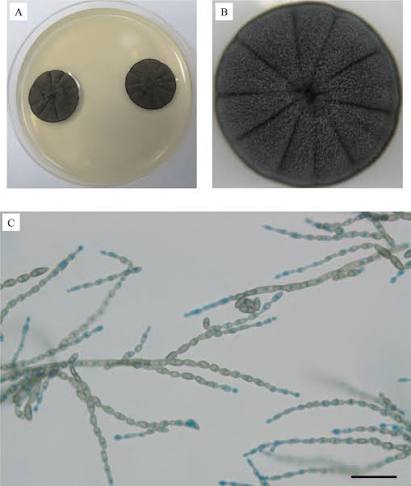
C. bantiana grows on Sabouraud dextrose agar as a dark pigmented mould, typically visible after 5 days of incubation at both 25°C and 37°C. The cell wall contains melanin, which produces black to gray, velvety floccose colonies. Histological examinations reveal brown-pigmented septate hyphae in tissue.
C. bantiania has been detected by broad-range fungal PCR at the University of Washington’s clinical reference laboratory. Between January 2009 and July 1, 2026, 49 cases have been detected: 43 in CNS tissue specimens and 6 in lung specimens. Cases originated from 21 states and the District of Columbia. The largest number of cases came from California, Florida, Texas, and Pennsylvania.
References
Nelson MT et al. Notes from the Field: Molecular Detections of Cladophialophora bantiana at a Clinical Reference Laboratory — United States, 2009–2026. MMWR Morb Mortal Wkly Rep. ePub: 2 October 2026.
Kantarcioglu AS et al. An updated comprehensive systematic review of Cladophialophora bantiana and analysis of epidemiology, clinical characteristics, and outcome of cerebral cases. Med Mycol 2017;55:579–604.
Lortholary O, et al. Reappraising Cladophialophora bantiana phaeohyphomycosis in France: retrospective nation-based study. Lancet Microbe 2024;5:100907


 How to resolve AdBlock issue?