

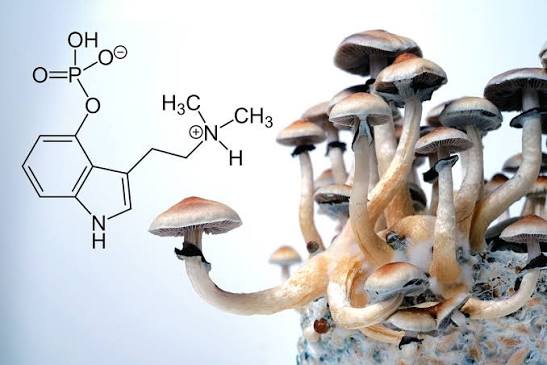
Psilocybin is a tryptamine alkaloid (4-phosphoryloxy-N,N-dimethyltryptamine) that is naturally present in mushrooms of the Psilocybe genus. Psilocybin is a psychedelic compound that has been used for centuries by indigenous peoples of Central and South America during spiritual and ceremonial events. For this reason, Psilocybe mushrooms are commonly referred to as magic mushrooms.
Psilocybin is a schedule 1 controlled substance and is not FDA-approved for any clinical indication. It is being studied as a therapy for treatment-resistant depression, obsessive compulsive disorder, anorexia, substance abuse disorders, and end-of-life anxiety in cancer patients.
A 2025 Rand Survey reported that psilocybin was the most widely used psychedelic substance in the United States. Approximately 11 million adults used it during the preceding year. Recreational use usually involves taking low doses, known as micro-dosing, which do not produce hallucinogenic effects.
Psilocybin is an inactive prodrug that is dephosphorylated by alkaline phosphatases and esterases to its active metabolite, psilocin (4-hydroxy-N,N-dimethyltryptamine). Psilocin is a lipophilic compound that crosses the blood brain barrier. It is a serotonin 5-HT2A receptor agonist that produces psychedelic effects.
Psychedelic effects typically begin 30 minutes after oral ingestion, peak around 90 minutes, and resolve over 4 to 6 hours. The psychedelic experience is characterized by visual and auditory illusions/hallucinations, amplified or altered emotions, distorted sense of time and space, altered sense of self, and mystical-type experiences.
Dose-dependent unpleasant effects include anxiety, paranoia, nausea, vomiting, dizziness, headache, and transient increases in heart rate and blood pressure. Approximately 4% of people with preexisting neuropsychiatric disorders experience more serious adverse effects including anxiety, paranoia, and emotional distress.
Laboratory detection of psilocybin is rarely indicated. Routine drug-of-abuse screens do not detect either psilocybin or psilocin. Psilocybin is converted to psilocin which as a short half-life of 1.5 to 4.5 hours. The acute effects of psilocybin usually resolve within 4 to 6 hours. The clinical effect has usually resolved before laboratory results would be available. Both psilocybin and psilocin are unstable in whole blood, which complicates blood-based detection. Only 1.5% to 3.5% of psilocin is excreted in urine, making urine testing unreliable.
References
Rosenblat JD, Husain MI, Psilocybin, JAMA, 2026;336(13):1165-1166.
Hinkie JT, et al. Adverse events in studies of classic psychedelics: a systematic review and meta-analysis. JAMA Psych. 2024;81(12):1125-1235.
Vásquez-Bonilla, José N.. 2026. Psilocybin, From Ancestral Use to Therapeutic Potential: A Multidimensional Review of Its Pharmacological Basis and Current Perspectives, Human Psychopharmacology: Clinical and Experimental: e70063. https://doi.org/10.1002/hup.70063.
Ling, S., Ceban, F., Lui, L.M.W. et al. Molecular Mechanisms of Psilocybin and Implications for the Treatment of Depression. CNS Drugs 36, 17–30 (2022).


 How to resolve AdBlock issue?